
EU CYBER RESILIENCE ACT / PRODUCT SECURITY
The product ships.
The responsibility continues.
The CRA’s arrival made product security a market-access and lifecycle issue. For UK suppliers, the practical task is to connect engineering, support and evidence across the EU offering.
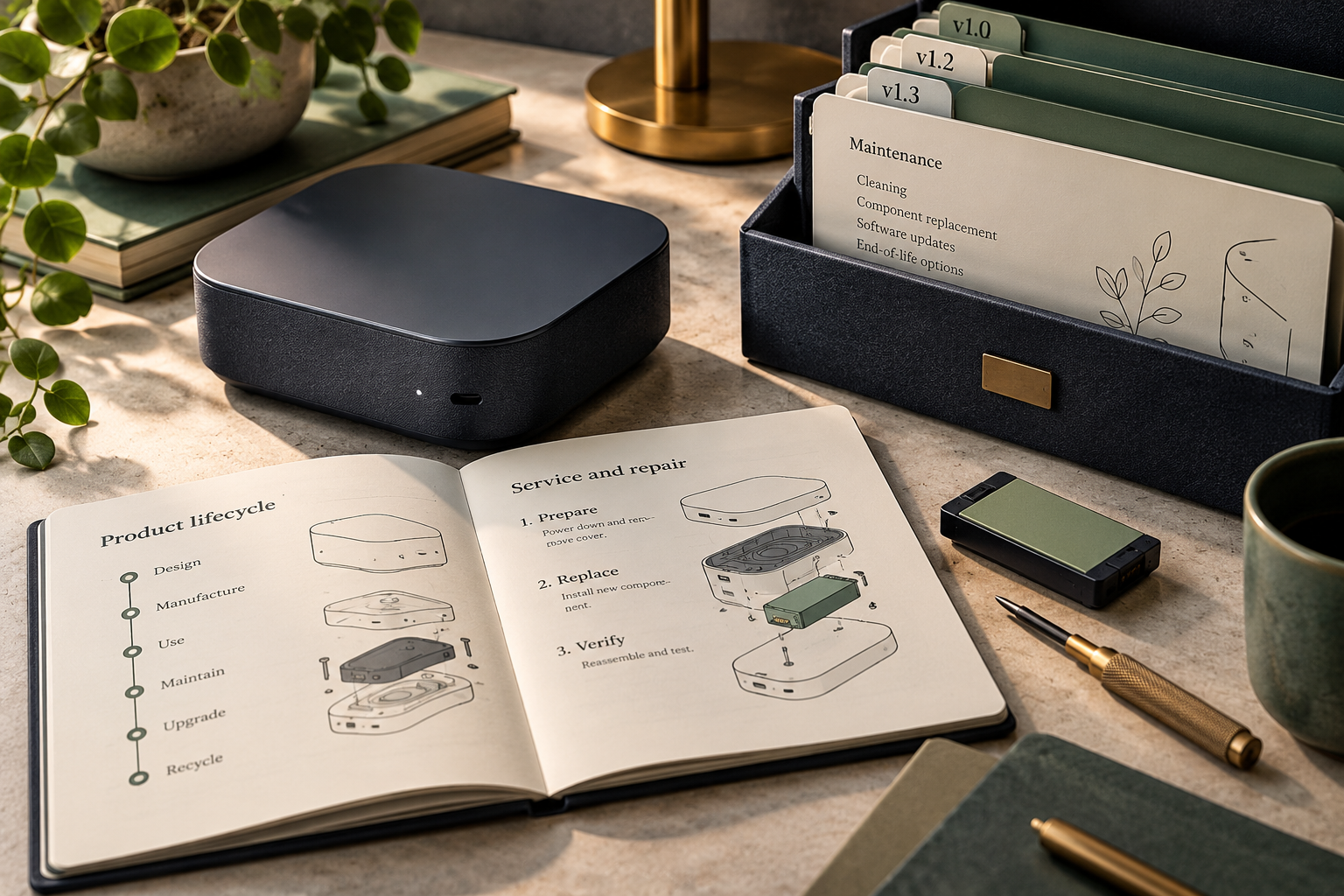
Selling a connected product creates a responsibility that lasts beyond delivery. A vulnerability discovered later can require engineering work, communication, an update and evidence that the manufacturer has a process for handling the problem.
That is the important insight behind the EU Cyber Resilience Act’s arrival in 2024. For UK businesses supplying the EU market, security becomes part of product planning, commercial commitments and continuing support—not just a final pre-release check.
THE EXECUTIVE BRIEF
Start with the product and the responsibilities around it.
- Determine the offering and market role in scope.
- Operate applicable reporting now and prepare the evidence needed for the relevant conformity route.
- Fund vulnerability handling and support as part of the product’s lifetime cost.
REVIEWED / 20 OCTOBER 2026
The CRA entered into force on 10 December 2024. Article 14 reporting applies from 11 September 2026, and the principal requirements from 11 December 2027. Notified-body provisions began on 11 June 2026. Firms need to distinguish the reporting duties already applicable from the broader product obligations still approaching.
01
Product security is an EU market decision for UK firms.
The CRA concerns products with digital elements made available on the EU market. Its scope includes relevant hardware and software, including components marketed separately and certain remote-processing functions integral to the product. The precise offering and applicable exclusions need to be assessed.
A UK manufacturer cannot settle the question by noting that its head office is outside the EU. Establish the market route, whose name the product is sold under and the responsibilities of manufacturer, importer and distributor. A business buying components for its own offering needs to understand what those dependencies mean for its product.
The regulation does not mean that every internal IT system, every cloud service or every item of open-source software automatically falls into the same category. Write down the scope decision and obtain advice where the product boundary or sector-specific regime is uncertain.
02
A product passport that engineering and support can use.
THE WORKING PRODUCT FILE
Evidence should travel with the version.
PRODUCT
What is supplied?
Versions, intended functions, connected services and the responsible market role.
COMPONENTS
What does it depend on?
Third-party software and hardware, component evidence and a way to identify affected versions.
ASSESSMENT
Why is the release supportable?
Risk assessment, relevant tests, technical documentation and the applicable conformity route.
SUPPORT
Who handles the next problem?
Vulnerability intake, update delivery, customer information and the stated support period.
CyberSolace product-file illustration, not an official CRA passport format or evidence that a product has passed conformity assessment.
A component list becomes useful when an advisory can be connected to a version and an engineer who can assess it. A test result becomes useful when the product team understands its scope and the changes made since the test. The file should support decisions, rather than accumulate documents nobody can reconcile.
Prepare the support commitment alongside the release plan. The business needs people, tools and a distribution route to receive reports, produce fixes and communicate with customers. A long support promise without operating capacity is a future liability, not a complete security strategy.
A separate team may own support, but the engineering feedback loop must remain intact. A serious vulnerability should be able to reopen design assumptions, supplier questions and release priorities.
03
Reporting and full conformity have different clocks.
As of this October 2026 review, reporting under Article 14 is already applicable. It addresses actively exploited vulnerabilities and severe incidents affecting product security. Establish who recognises the trigger, obtains the necessary facts and can submit through the relevant process.
APPLICABLE NOW / PREPARATION CONTINUES
Do not use 2027 as a reason to postpone reporting readiness.
The staged timetable allows preparation for the main product requirements; it does not move an already applicable duty into the future.
For the wider conformity programme, establish the product category and permitted assessment route, the documentation and the declaration and CE-marking requirements relevant to the offering. A generic certificate or a promise from a component supplier does not automatically establish conformity for your finished product.
The detailed reporting clocks and support rules are covered in our fuller CRA lifecycle briefing. Use this article as the UK supplier’s starting point and keep the product-specific interpretation current.
04
Keep the UK and EU programmes connected, with scope intact.
The UK’s Cyber Security and Resilience Bill concerns a different regulatory framework around network and information-system resilience. Government material still describes it as a Bill at this review. Do not treat proposed duties as already commenced, or assume that compliance with one framework settles the other.
A firm operating across both markets should separate the obligations while sharing useful evidence. Product inventory, incident contacts, supplier information and testing can support more than one programme, provided the team understands which requirement each piece of evidence answers.
| Management decision | Practical output |
|---|---|
| Which products are affected? | A reasoned scope and market-role record. |
| Which commitments are we making? | A support model, customer information and funded responsibilities. |
| Which work is urgent? | Applicable reporting readiness and a prioritised gap plan. |
| What can we reuse? | Evidence mapped to distinct product, entity and sector obligations. |
05
A preparation plan that survives the next release.
- Assign a product owner and an accountable sponsor across engineering, support and compliance.
- Inventory versions, components and customer-facing support commitments.
- Test vulnerability intake, escalation and update delivery.
- Review the intended conformity route and missing evidence.
- Bring unresolved supplier, skills or support costs into the commercial plan.
Repeat the review when the offering changes. A new remote function, a new component or a substantial product modification can change the assumptions behind an earlier assessment. Keep the programme attached to the product lifecycle rather than a one-off launch checklist.
THE CYBERSOLACE PERSPECTIVE
Make security a continuing product capability.
The commercial value is a product the organisation can explain, maintain and support. Start with one offering, connect the owners and test how the next vulnerability would be handled.
SOURCES & EDITORIAL REVIEW
Research and presentation reviewed 20 October 2026. Original publication history retained; implementation dates and regulatory distinctions corrected.