
SHIPBOARD PRACTICE / INDUSTRY GUIDELINES
Before the
next voyage.
Put cyber risk into the ship’s operating conversation.
The industry guidelines help shipowners and operators examine cyber risk across people, systems, and working arrangements. Use them to connect what happens onboard with the decisions made ashore.

Read the guide with the vessel in mind.
A generic fleet policy cannot tell you whether a particular ship’s recovery arrangements work. Start with its systems, operating conditions, external connections, and the people who depend on them.
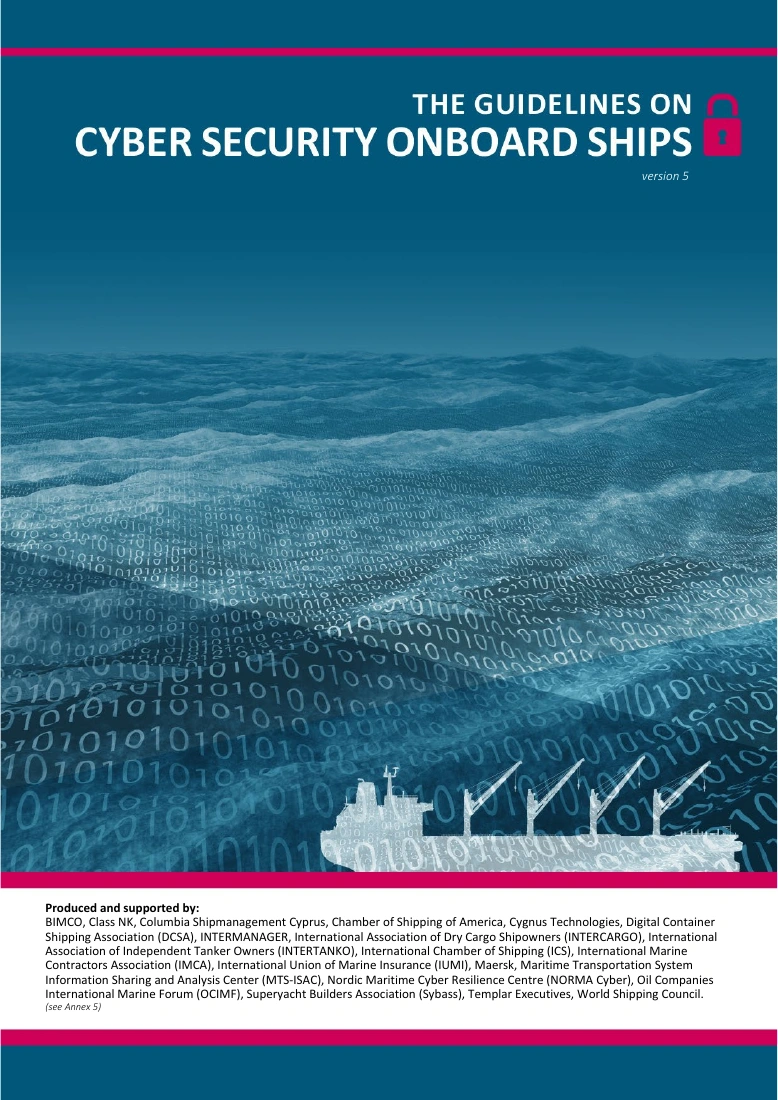
Version 5 of The Guidelines on Cyber Security Onboard Ships addresses management responsibility, risk assessment, protection, detection, response, and recovery. It is industry guidance; it does not by itself establish compliance with every flag, class, or other applicable requirement.
THE ORIGINAL RESOURCE
A shared reference
for ship and shore.
Use the full guide for its detail, examples, and definitions. Confirm the edition and any requirements relevant to the ship before adopting a procedure.
AN OPERATIONAL LOG
Three conversations
worth having onboard.
THE BRIDGE
What can the crew rely on?
Choose a service that matters to the voyage. Discuss what the crew would see if it became unavailable or unreliable, how they would report it, and which contingency arrangements they could use.
ENGINEERING & SUPPORT
Who can change the system?
Review a maintenance or remote-support arrangement. Confirm who authorises access, how work is supervised, and what records or configurations are needed if the change must be reversed.
THE SHORE TEAM
What support is available?
Check who will coordinate supplier contact, incident response, and recovery. Ensure the vessel can reach the right people when its normal communications are disrupted.
The questions are CyberSolace discussion prompts. Apply them through the ship’s approved operating and safety arrangements; do not test disruptive actions on live systems without proper authority.
FROM DISCUSSION TO PRACTICE
Exercise the handover between teams.
Choose one plausible disruption and walk through the first decisions onboard and ashore. Record where responsibility, contact information, or recovery evidence is unclear.
Give each improvement an owner and review date. Revisit the assumptions after changes in equipment, support arrangements, or crew responsibilities rather than treating the review as a one-off exercise.
BIMCO’s cyber risk management page gives the publisher’s wider context and guidance position. Use that alongside the actual documents and the requirements applicable to your operation.
Make ship and shore decisions work together.
CyberSolace can help you structure a practical cyber-risk and response discussion around your operating priorities.
SOURCES & REVIEW
Industry guidelines, version 5 · BIMCO cyber risk management. The linked PDF is the edition dated November 2024; it is distinct from the original publication date of this post.
Originally published 8 July 2017. Resource links and presentation reviewed 20 October 2026.